


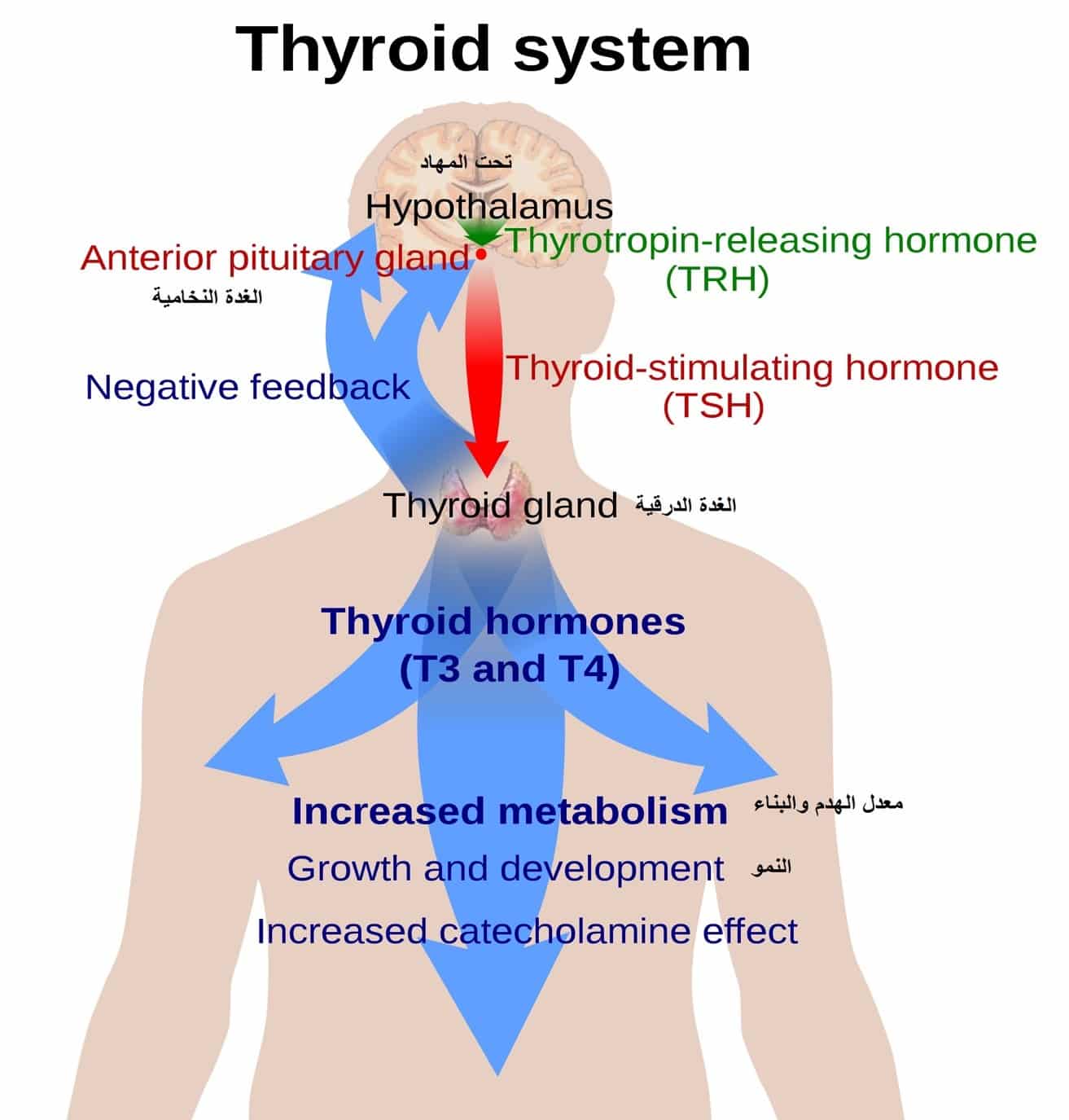
Gland Function: Despite most doctors focusing only on the testicles and the pituitary gland, it has been scientifically proven that the impact of other glands on the reproductive process is significant. Let’s take, for example, the thyroid gland and the impact of thyroid hormone deficiency on the chances of having a child for both men and women. Among these tests are:
- Thyroid Gland Hormones
- Adrenal Gland Hormones
- Pituitary Gland Hormones
- Sex Hormones
Thyroid Gland
The thyroid gland is a small gland located in the lower front part of the neck and is responsible for many vital functions in the body, such as:
- Metabolism and building processes
- Energy regulation
- Mood state
The endocrine system is an integrated and regular system, and the thyroid gland controls the body’s metabolic processes. To activate the thyroid gland, the hypothalamus secretes thyrotropin-releasing hormone (TRH), then the pituitary gland secretes thyroid-stimulating hormone (TSH). The thyroid gland then starts secreting T3 and T4 hormones, which manage the body’s metabolic processes. When the secretion of these hormones decreases, this condition is known as hypothyroidism.
Thyroid problems lead to a transformation in metabolic processes, energy, and reproductive health. A thorough examination of the thyroid gland is necessary to discover these causes that are often overlooked by doctors.
Role of the Thyroid Gland in Men’s Health:
Hypothyroidism leads to a decrease in the number and motility of sperm, causing a decrease in libido and erectile dysfunction. It can also lead to a decrease in male hormones and pituitary hormones. On the other hand, an increase in thyroid function can lead to infertility due to an increase in male hormones, causing significant damage to sperm. Advanced thyroid function analysis, especially in cases of refractory infertility, can be considered a crucial test that is often neglected by doctors.
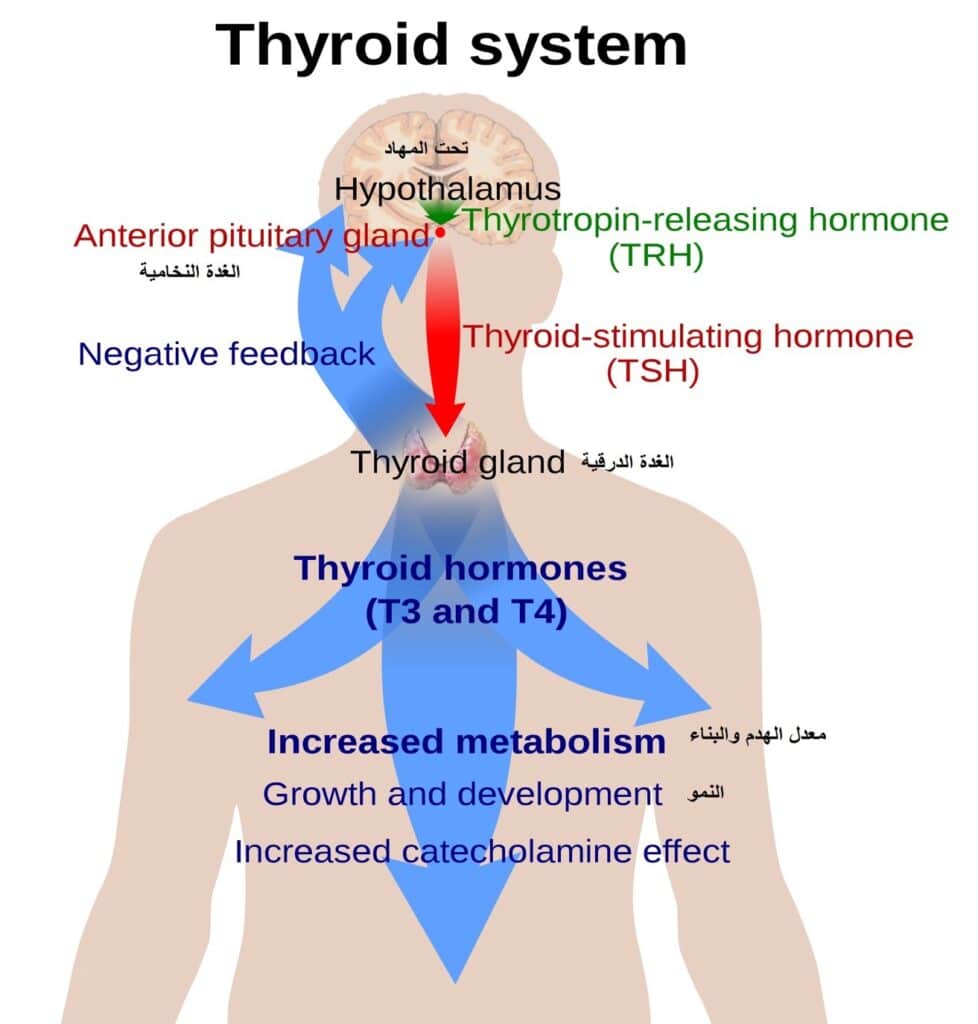
The thyroid function test is a set of tests used to inform us about the adequacy of the gland for its function and its ability to perform. There are two types of pathological problems that can affect the thyroid gland: if the gland produces hormones weakly, it is called hypothyroidism, and if the production is increased, it is called hyperthyroidism.
There are several tests that explain the function of the thyroid gland.
- Free and total T3
- Free and total T4
- Revised T3
- TSH
- TSI
- TPO
- TPO
- T3RU
TSH Report
When TSH (Thyroid Stimulating Hormone) is present in a normal manner, it means there is no deficiency or excess in the thyroid gland levels. In TSH analysis, a high ratio indicates a deficiency in thyroid secretions, while a low ratio indicates an excess in thyroid secretions.
The normal range for this hormone is 0.3-0.5 mU/ml. This hormone’s secretion is controlled by a negative feedback mechanism. If the thyroid hormone level decreases, its secretion increases, and if the level of this hormone decreases, its secretion increases to stimulate the thyroid gland to produce T3-T4 hormones.
If the ratio exceeds 15, it is diagnosed as hypothyroidism. If the ratio is between 5-15, another test, TRH, is needed. If the ratio is less than 0.1, the diagnosis is hyperthyroidism.

TRH Analysis
This analysis is conducted to confirm thyroid gland issues when it is unclear through TSH analysis. TSH levels should be measured before and 15-30 minutes after injecting TRH. If the hormone level rises, it indicates hypothyroidism. However, with increased function, there is no change in levels before or after injection.
T4 Analysis (TT4-FT4)
This is one of the most important thyroid hormones, often requested with TSH. T4, or thyroxine, regulates thyroid function. Elevated levels suggest increased thyroid function, accompanied by symptoms such as tremors and weight loss.
T3 Analysis
Produced by the thyroid gland, this hormone can be used to diagnose Graves’ disease, indicating increased thyroid activity due to immune system weakness.
Thyroid Antibodies Analysis
This autoimmune disease affecting the thyroid gland requires various immune tests to detect the presence of antibodies.
Thyroid Disorders
Hypothyroidism: There are several reasons that can lead to a deficiency in thyroid function, with the most important being immune deficiency. Other causes include:
- Iodine deficiency in the diet
- Congenital disease
- Certain medications
- Viral inflammation of the gland
Symptoms of hypothyroidism resemble male hormone deficiency symptoms:
- General fatigue
- Hair loss
- Lack of sweating
- Weight gain
- Continuous exposure to infections
- Enlarged gland
- Cold hands and feet
- Joint pain
- Decreased libido
- Cold sensitivity
- Constipation
- Swollen eyelids
Complications of hypothyroidism, resulting from weak thyroid hormone levels, can affect various body systems responsible for metabolism, breakdown, and energy production. These complications include:
- The digestive and cardiovascular system: Weak thyroid hormones can lead to a weak pulse and irregular heartbeats.
- Kidneys: Reduced blood flow to the kidneys impairs water excretion and sodium absorption, lowering blood sodium levels.
- Nervous system: Thyroid hormone deficiency may cause muscle weakness or nerve damage, leading to difficulty breathing, voice hoarseness, difficulty walking, speech difficulty, and pain in the hands and feet.
- Infertility: Thyroid hormone deficiency affects reproductive health by regulating the production and function of sex hormones, leading to male complaints such as sexual weakness, sperm deformities, decreased libido, and reduced sperm efficiency.
Treatment for Hypothyroidism:
- Medication: Involves various chemical compounds to compensate for deficient hormones or provide supplements such as iodine, selenium, and magnesium.
- Diet: Iodine-rich foods (shrimp, sea vegetables, and berries), avoiding raw vegetables and soy products.
- Exercise: Regular physical activity helps prevent feelings of fatigue, stress, joint or muscle pain.
Hyperthyroidism: Excessive activity of the thyroid gland in secreting hormones T3-T4, responsible for supplying energy to cells and regulating breakdown and building processes, leads to hyperthyroidism.
Causes of increased thyroid function:
- Increased iodine levels in the body
- Immune or microbial inflammation of the gland
- Testicular tumors
- Thyroid or pituitary tumors
- Elevated hormone levels prescribed as medication above required levels
Symptoms of increased thyroid function:
- Insomnia
- Nervousness
- Weight loss
- Infertility
- Sweating
- Appetite disorders
- Protruding eyes
- Enlarged gland
- Increased heart rate
- Fatigue
- Lack of concentration
- Itching
- Hair loss
- Nausea and vomiting
- Male breast enlargement (gynecomastia)
Hyperthyroidism Treatment:
- Medications: Hormone inhibitors to stop gland hormone production.
- Radioactive Iodine: Destroys hormone-producing cells.
- Surgery: Excision of the affected part or the entire gland.
- Other Treatments: Focus on the diet, emphasizing sodium and calcium, along with regular exercise.
Adrenal Gland
The adrenal gland is composed of two glands about the size of a large finger, located directly above the kidneys. It is considered part of the body’s glandular system, also known as the suprarenal gland. This gland produces more than 50 different hormones that control most functions of the human body. It plays a role in the endocrine system, consisting of the hypothalamus, pituitary gland, and adrenal gland. The adrenal gland is crucial in the realm of the body’s response to stress. When an individual experiences pressure or an emergency situation, the brain signals the gland to release adrenaline hormone. This hormone is then sent through the blood to muscles throughout the body, preparing them for a sudden reaction. The adrenal gland has two main parts, each with its independent functions:
Cortex:
- Glucocorticoids: Hormones that control blood sugar levels, aid in immunity, and metabolic processes in the body. They also have a strong anti-inflammatory effect.
- Mineralocorticoids: Hormones that help stabilize blood pressure, regulate blood flow, control mineral absorption, and convert sodium to potassium.
- Sex Hormones: Such as male and female hormones.
Medulla (Inner Part):
- Adrenaline: A hormone that maintains heart health, ensuring that each organ receives the appropriate amount of blood.
- Other Hormones: Including histamine, serotonin, chromogranins, and neuropeptide hormones.
Adrenal gland hormones are responsible for states of fear and focus. They initiate the alertness of the heart, widen air passages, constrict surface blood vessels, and employ other means to prepare the body for potential threats.
إجهاد الغدة الكظرية
What is Adrenal Fatigue?
It may seem strange that lethargy resulting from the adrenal gland is a simple cause, not falling into the usual category of visible disease effects. Due to this, doctors often fail to diagnose it, even though most studies have shown that at least 80% of people suffer from adrenal fatigue. It appears that some experience this fatigue after a period of stress, while others may suffer from it after a chronic illness or exposure to an accident. Regardless of the cause, this fatigue can significantly impact your life and enjoyment, with research indicating that it rapidly increases fat accumulation, making weight loss nearly impossible.
Recognizing Signs of Adrenal Fatigue:
While fatigue may be the primary symptom of this condition, it is not the only sign, as a deficiency in adrenal hormones can affect all body functions without exception. Let’s mention some symptoms associated with this condition:
Difficulty Waking Up in the Morning:
- Individuals wake up feeling tired and disoriented, even after a long sleep. Various factors appear as initial signs of stress, including an increase in cortisol and adrenaline hormones, disrupting the natural sleep cycle.
High Levels of Fatigue:
- In the final stages of adrenal fatigue, the gland loses the ability to produce hormones needed for various vital body functions. This means that all hormones, from adrenaline to others, will be released in insufficient amounts, making the task of waking up and starting work a challenging one.
Inability to Handle Stress:
- Anyone experiences varying degrees of stress from time to time, as we rely on various adrenal hormones like adrenaline and cortisol to regulate reactions such as increased alertness, concentration, and activation of muscular strength. However, with the gland’s inability to produce the necessary hormones, this leads to a lack of enthusiasm, tiredness, and tension.
Craving Salty Foods:
- The adrenal gland’s cortex secretes the Aldosterone hormone, which works with the kidneys to regulate water and mineral secretion. When this hormone decreases, it leads to increased secretion of these elements in urine, resulting in a craving for salty and unusual foods.
Increased Nighttime Energy:
- A decrease in cortisol levels can take its toll on the damage caused by low energy levels throughout the day. Cortisol is known to be at its highest levels in the morning, gradually decreasing, unlike adrenal fatigue patients who experience an increase in hormone levels over time while being low in the morning. This sometimes leads to insomnia.
Dependence on Stimulants:
- If you constantly seek energy in a cup of tea or a cup of coffee, remember that you may be suffering from this condition. This doesn’t apply to the occasional cup of tea or coffee during the day but is applicable to its repetition each time energy is needed for life affairs.
Weak Immune System:
- Cortisol hormone has a strong anti-inflammatory effect, making it an activator for the body’s immune system. It’s worth noting that inflammation is a sign of your body’s internal war against a particular microbe. Still, cortisol prevents the spread of this sign and activates the body’s immune system to attack the microbe.
Uncommon Symptoms:
- In addition to the common symptoms mentioned earlier, there are many uncommon symptoms associated with adrenal fatigue. Some are linked to what has been mentioned before, while others come in separate groups, such as respiratory problems, dark circles around the eyes, fainting, dry and cracked skin, frequent urination, joint pain, muscle weakness, obesity, lower back pain, decreased libido, and low blood sugar levels.
Causes of Adrenal Fatigue:
The occurrence of adrenal fatigue begins when the body and the gland fail to maintain their function in the presence of daily stress. This is similar to immune deficiency diseases, and there are many reasons that can lead to it:
Psychological Stress:
- The primary cause of adrenal fatigue is psychological stress, which manifests in various forms in daily life, such as financial anxiety, emotional and marital problems, or work-related issues. It’s essential to note that exposure to a certain level of psychological stress can be managed in the short term. However, prolonged exposure to increased stress may lead to various diseases and possibly long-term health risks.
Diet:
- “We have consumed too many sugars today.” This means that our bodies will exert more effort to incorporate glucose into our system, leading to increased secretion of cortisol and insulin. This puts additional pressure on the pancreas and adrenal gland, in addition to contributing to obesity and increased weight, which further stresses all body organs.
Lack of Sleep:
- The body requires restful sleep to repair all exhausted and susceptible cells daily. If you do not get restful sleep, free from disturbances, for at least seven hours daily, you may be susceptible to adrenal fatigue. Therefore, it is essential to engage in activities after getting a comfortable and sufficient amount of sleep.
Pollutants and Toxins:
- Every year, around 2000 new chemicals enter the market, and we all are exposed to these substances to varying degrees. This places the body under severe pressure, affecting the immune, digestive, and adrenal systems.
Injuries and Chronic Diseases:
- Adrenal fatigue can occur after prolonged exposure to certain factors, such as chronic diseases (asthma, diabetes, arthritis, any disease that adds pressure to the adrenal gland). When a person is afflicted with such diseases, the gland is under long-term pressure, while acute illnesses may also lead to adrenal fatigue, such as injuries, wounds, surgeries, and medical procedures, all of which can also cause adrenal fatigue.
From this, we can say that the problem can result from one of these factors. To determine a successful treatment plan, we must identify the cause of the patient’s exposure to this condition to avoid it.
Treatment of Adrenal Fatigue:
The first step in treating adrenal fatigue is to focus on avoiding the factors or causes that led to it, as mentioned earlier. Freeing the gland from the pressure on the body allows it to gradually combat fatigue day by day, by reducing overall body stress, avoiding toxins, changing your diet, and enabling the body to enjoy good health, allowing it to use all its resources for good health.
Many believe that food or the path to recovery from this disease plays a role, as in all chronic diseases. What you eat and how you nourish your body plays a role in the symptoms you experience. There are many fantastic foods that can support or protect the adrenal gland. These foods provide the necessary energy and heal the affected gland, enabling it to return to normal functioning. Before entering a dietary program for the health of the gland, it is best to start by ridding the body of toxins and hazardous chemicals first. We can say that we begin by avoiding some harmful substances for the gland from our daily dishes, such as:
Caffeine:
- Caffeine disrupts the daily sleep system, making it difficult for the adrenal gland to return to its normal function after a hard day’s work. Drinking coffee, tea, and juices is known to be a major cause of exposure to gland weakness. It is necessary to refrain from it or reduce consumption to once, and in the morning only.
Sugar and Sweets:
- Sweets can add more pressure to the gland because they force the body to release more insulin and cortisol.
Processed Foods:
- Any pre-prepared or microwave-ready food carries a significant risk to health because it contains many preservatives that the body finds challenging to digest. You must find alternatives from natural foods that the body can easily digest.
Hydrogenated Oils: I know this will surprise many, but it is essential to stay away from corn oil because it is one of the oils considered a dangerous source of inflammation in the body. It is also a significant contributor to adrenal gland destruction, along with soybean oil. Instead, try to consume oils containing good fats, such as olive oil and coconut oil.
Now you know what to avoid in your diet and what foods you should start adding to ensure a very healthy adrenal gland, such as:
- Fatty fish like salmon
- Turkey and chicken
- Avocado
- Coconut
- Olive oil
- Vegetables like broccoli and kale
- Sea salt
- Nuts like almonds and walnuts
- Pumpkin, flax, and chia seeds
- Seaweed
To achieve a healthy adrenal gland, you should:
- Follow the aforementioned diet, rich in nutrients, low in sugars, high in natural fibers, and healthy fats.
- Ensure the body benefits from vitamins and minerals beneficial to the adrenal gland by changing the diet, as mentioned earlier, and adding missing elements to our food or consuming the following elements:
- Zinc
- Vitamins C, B12, B5, D3
- Magnesium
- Fish oil
- Basil
Make sure to eliminate stress from your life as well. While the impact of proper food and nutrition on adrenal gland health is evident, the effect of psychological stress on gland health is also apparent. To obtain and maintain a healthy gland, it is essential to stay away from psychological stress. Take care of your mind and body, and avoid problems and stress.
Try one of these methods:
- Get an adequate amount of sleep (at least 8 hours at night).
- Rest whenever needed.
- Regularize your lifestyle and sleep, ensuring it is healthy.
- Avoid relationships and activities that induce stress.
- Seek smiles and cherish them wherever you find them.
- Apply everything learned about proper nutrition and engage in simple exercises to protect yourself from food chemistry.
- Avoid people with negative energy.
- Ensure you have dedicated time for yourself only.
- Seek medical advice when you find yourself in need of it, and steer clear of advice from those without expertise and experience.
الغدة النخامية
نظام الغدد في جسم الانسان ينسق افراز وعمل الاعضاء والانسجة عن طريق الهرمونات والتي تعتبر مواد كيماوية تفرز من خلية معينة في الغدة الي الدم وبمجرد وصول الهرمون الدم يبدأ تأثيره مباشرة علي العضو المراد والذي يمكن ان يكون قريبا او بعيدا من مكان الإفراز وتنجذب الهمونات الي مستقبل معين خارج او داخل العضو المراد التأثير عليه
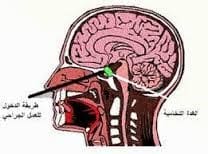
الغدة النخامية هي غدة مهمة في الجسم ، الغدة النخامية تسيطر على العديد من هرمونات الغدد الأخرى (مثل الغدة الكظرية والغدة الدرقية)، الغدة النخامية عادة ما تكون في حجم حبة البازلاء ، الغدة النخامية تتكون من جزئين غالبا ما تسمى الفصوص ، الجزء الأمامي، يدعى الغدة النخامية الأمامية والجزء الخلفي يسمى الغدة النخامية الخلفية، تقع الغدة النخامية في حفرة عظمي تسمى الحفرة النخامية، هذه الحفرة وراء جسر الأنف وتحت قاعدة الدماغ، على مقربة من الأعصاب البصرية.
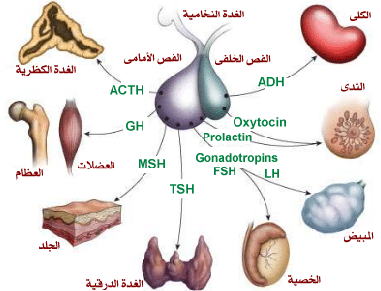
تعتبر الغدة النخامية فى كثير من الأحيان أهم جزء في نظام الغدد الصماء لأنها تنتج هرمونات تتحكم في كثير من وظائف الغدد الصماء الأخرى، الغدة النخامية الأمامية بها العديد من الهرمونات الهامة مثل هرمون النمو وهرمونات البلوغ و هرمون تنشيط الغدة الدرقية و هو الهرمون الذي يحفز الغدة الدرقية ، و هرمون البرولاكتين و هرمون (ACTH) والذي يحفز هرمون التوتر و الكورتيزول ، الغدة النخامية الخلفية تفرز هرمون توازن السوائل يسمى هرمون مكافحة ادرار البول (ADHH).
الفص الأمامي
تمثل الخلايا الموجودة في الفص الأمامي نسبة 80% من وزن الغدة الكلي وهي مسئولة عن تكوين وافراز هرمونات متعددة مسئولة عن النمو والمساعدة في تنشيط عدةغدد اخري ومن هذه الهرمونات:
Adrenocorticotropic hormone ACTH
يتم تنظيم افراز هذا الهرمون من خلال هرمون اخر محفز له CRH يتم افرازه من تحت المهاد وايضا يلعب الضغط العصبي والتوتر دورا في افرازه وهذا الهرمون بدوره ينبه قشرة الغدة الكظرية لافراز هرمون الكورتيزول وبعض مكونات الهرمون الذكري مثل DHEA ولا تملك الغدة الكظرية القدرة علي انتاج وافراز هرمون الكورتيزول بدون هذا لهرمون الهام جدا
الهرمون المحفز للغدة الدرقية TSH
يملك هذا الهرمون القدرة علي تنظيم ووظيفة الغدة الدرقية وتنشيط انتاج وافراز هرمون الغدة الدرقية ويتم تنظيم عمل هذا الهرمون عن طريق هرمون اخر قادم من تحت المهاد وهو TRH
FSH-LH
هرمونان يملكان القدرة علي انتاج الهرمونات الجنسية ويتم تنشيطهما من خلال GnRH ويتم تقليل انتاجهما من خلال هرمون الذكورة ووظيفتهما منتهي الاهمية في وظيفة الانجاب
FSH
ينشط خاليا سرتولي ومنشط لتخليق الحيوانات المنوية بينما LH يعمل علي خلايا ليدج لانتاج هرمون الذكورة والهام جدا في تخليق الحيوانات المنوية وكافة وظائف الرجل الجنسية
Growth hormone (GH)
ينشط هذا الهرمون النمو الجسدي كما ينشط افراز هرمون هام اخر يسمي IGF-1 وهو ينشط النمو بشكل عام
البرولاكتين أو الهرمون الحليبي Prolactin
تمثل الخلايا المنتجة لهذا الهرمون 30% تقريبا من وزن الغدة ويمكن ان ينشط هذا الهرمون في العلاقة الجنسية والضغط العصبي ويمثل علامة قوية لصحة الغدة وخلوها من الامراض
الفص الخلفي
هرمونان في منتهي الاهمية يتم افرازهما من هذا الفص و هرمون Vasopressin و Oxytocin
Vasopressin or ADH
هرمون مسئول عن تخزين المياه في الكليتين
Oxytocin
يتم تنشيط افرازه عن طريق الرضاعة ويقوم بوظيفة الضغط لادرار اللبن وكذلك لعودة الرحم لحجمه الطبيعي بعد الولادة
أعراض الغدّة النخاميّة
تصنّف اضطرابات الغدّة النخاميّة إلى قسمين وهما: فرط الغدّة الخاميّة، والثاني قصور في الغدّة النخاميّة.
أعراض فرط الغدّة النخاميّة
يحدث فرط في الغدة النخاميّة عندما يتم إفراز هرمون معيّن بشكل زائد عن اللازم من النخاميّة، وعلى سبيل المثال عندما تزيد الغدّة النخامية الأماميّة من إفرازها فذلك يؤدي الى الزيادة في النمو، أو ما يسمّى بالعملقّة لدى الأطفال، أو حالّة تسمى بضخامّة النهايات عند الأشخاص البالغين، حيث تتسبّب في الزيادّة في أحجام أنسجة الجسم مع الزمن ومن هذه الأعراض نذكر مايلي:
- الزيادّة في نمو الشعر لدى النساء.
- حدوث ضخامّة في القدمين، واليدين، والوجه، والجبهة.
- يحدث تبدّلاً في لون الجلد.
- حدوث مشالكل في اللسان.
- الزيادة في التعرّق وانقطاع النفس خلال النوم.
- الضعف فيي العضلات وألم في المفاصل.
- الشعور بالصداع وبحّة في الصوت.
- خروج الحليب من الثدي عند النساء.
- حدوث مشاكل في الإبصار.
- خدران الجلد وانقطاع الطمث أو اختلال به.
أعراض قصور الغدّة النخاميّة
يحدث النقص في الغدّة النخاميّة عندما لا تقوم الغدّة بإفراز الكميّة الكافية من هرمون معين، مثلاً عندما لا تقوم الغدّة النخاميّة الأماميّة بعملها اللازم ينتج عن ذلك البطء في النمو خلال مرحلة الطفولّة، وفي حال كانت الغدّة الخلفيّة فينتج عنها حالّة (البوالّة التفهة)، وهي إنتاج بولاً بنسبّة زائدة ممّا يؤدي الى الجفاف، وتعتمد ظهور العلامات والأعراض وشدّتها على الهرمون الناقص والأعراض هي كالتالي:
- قلّة الإثارّة الجنسيّة والعقم.
- الشعور بالوهن.
- يشعر المريض بالبرودّة والحساسيّة منها، مع صعوبة شعوره بالدفئ الدائم.
- النقص في الوزن.
- عدم تناول الطعام بالشكل الكافي واللازم، مع فقدان الشهيّة.
- حدوث فقر الدّم.
- حدوث انتفاخ في الوجه.
- قصر في القامّة لدى الأطفال.
- نقص في الشعر بالوجه والجسم لدى الرجال.
- فقدان شعر العانّة، وغياب الطمث، وعدم انتظامه لدى النساء.
ما هى اضطرابات الغدة النخامية؟
وتحدث هذه المشكلة الأكثر شيوعا مع الغدة النخامية عندما يتطور نمو ورم حميد يمكن أن يسبب إنتاج الغدة النخامية لهرمون زائد، أو أنها يمكن أن توقف إنتاج الهرمون، أو أنه يمكن أن يجعل الغدة النخامية غير عاملة اى ان (انتاج الهرمون لا يتأثر بأي شكل من الأشكال).
الأسباب النادرة الأخرى من اضطرابات الغدة النخامية ويمكن أن تشمل، على سبيل المثال، إصابات فى الدماغ، و السكته النخامية .
اعراض الغدة النخامية
الأشخاص الذين يعانون من ورم الغدة النخامية قد يواجهون الأعراض أو العلامات التالية. في بعض الأحيان، الأشخاص الذين يعانون من ورم الغدة النخامية لا تظهر أي من هذه الأعراض، احيانا قد يكون سبب هذه الأعراض حالة طبية اخرى لا علاقة لها بورم الغدة النخامية، ويمكن أن تشمل اعراض ورم الغدة النخامية:
- الصداع.
- مشاكل في الرؤية بما في ذلك عدم وضوح الرؤية وفقدان الرؤية المحيطية.
- التغييرات في الدورة الشهرية عند النساء.
- العجز الجنسي وعدم القدرة على تحقيق أو المحافظة على الانتصاب في الرجال بسبب التغيرات الهرمونية.
- العقم وهذا يعني عدم القدرة على إنجاب الأطفال.
- إنتاج غير مناسب من حليب الثدي.
- متلازمة كوشينغ وهى مزيج من زيادة الوزن، وارتفاع ضغط الدم، ومرض السكري، والكدمات التي يسببها الإفراط في ضخامة النهايات، وتوسيع في الذراعين والساقين، وسماكة الوجه والجمجمة والفك الناجمة عن كثرة هرمون النمو.
- الشعور بالتعب غير المبرر.
- تغيرات في المزاج.
- التهيج .
يسبب ورم الغدة النخامية ثلاث طرق مختلفة بسبب انتاج هرمون او اكثر من الهرمونات التالية
الغدة النخامية و هرمون النمو
تعتمد اعراض هرمون النمو على سن المريض، في الأطفال فقبل انغلاق لوحات العظام من الممكن زيادة النمو بسبب العملقة، وسوف تلاحظ افراط فى حجم الجسم والطول، اما في البالغين زيادة هرمون النمو يسبب ضخامة الاطراف و النمو المفرط في الأنسجة و لين العظام، وارتفاع نسبة السكر في الدم، وارتفاع ضغط الدم وأمراض القلب وتوقف التنفس أثناء النوم، وزيادة الشخير، والألم، بما في ذلك الصداع.
هرمون تنشيط الغدة الدرقية (TSH)فى الغدة النخامية
-الكثير من الأسباب تؤدى لزيادة إنتاج هرمون الغدة الدرقية، مما يؤدي إلى التوتر والتهيج، وسرعة دقات القلب وارتفاع ضغط الدم وأمراض القلب، وزيادة التعرق، والجلد الرقيق، وفقدان الوزن.
زيادة هرمون البرولاكتين فى الغدة النخامية
يسبب زيادة افراز هرمون البرولاكتين إفراز غير ملائم للبن الثدي، حتى في الرجال يسبب هشاشة العظام وهو ضعف العظام و فقدان الدافع الجنسي و العقم و عدم انتظام الدورة الشهرية فى النساء والعجز الجنسي

لا تعليق