



The Body Function Improvement Program is designed to address medically relevant factors contributing to fertility issues that may have a negative impact on an individual’s ability to achieve and maintain a healthy pregnancy. While the Sperman program focuses on individual activities related to lifestyle, the Body Function Improvement Program is designed to address risk factors associated with humans, including:
- Hormonal imbalances
- Nutritional supplements and prescriptions
- Semen analysis and influencing risk factors
- Varicocele
- General medical conditions that can affect male fertility
- Male sexual dysfunction
- Ejaculation failure
Do I need to see a doctor while undergoing the medical improvement program?
It is recommended that men with abnormal fertility test results consult a specialist during the process of enhancing their fertility capabilities, for three reasons:
Some medical tests require a special request from the specialist to determine the diagnosis and prescribe appropriate treatment for each case.
Some medical problems (such as testicular cancer) are more common in men with fertility problems. This is why I recommend that men with abnormal fertility test results consult a specialist to investigate possible underlying medical problems.
You need access to a trained male infertility specialist who can help guide you through the steps to maximize your fertility potential.
General steps for the medical improvement program:
If you have abnormal fertility test results and are working with a specialist in male fertility issues, they can generally perform some blood tests to assess hormone-related issues. Varicocele can be evaluated through examination and/or scrotal ultrasound (in the standing position). Issues related to medications, nutritional supplements, erectile dysfunction, and ejaculation problems can be assessed by taking a comprehensive history during the evaluation. You can review the list of medically relevant fertility factors, and for each area marked “Yes,” you can review the information and recommendations related to it. It provides information on effectively managing these medical risk factors. If you are working with a doctor, please print a copy of the completed medical fertility profile and bring it with you to your next appointment.
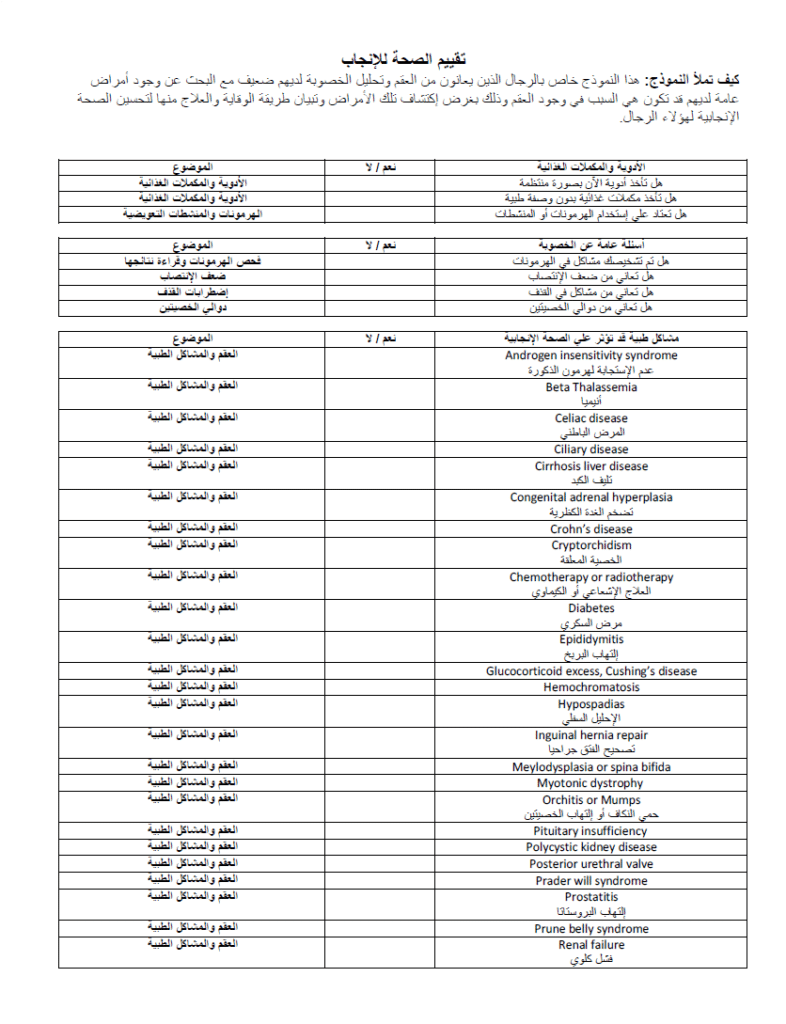
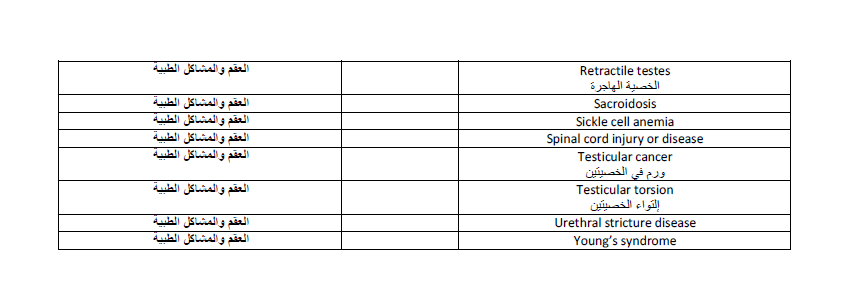
An Overview of Medical Fertility
The goal of the medical improvement program is to provide men with useful information on how to assess medical issues that may have a negative impact on their fertility potential and effectively address them. If you cannot access a specialist in male infertility, this section can help ensure that you receive adequate care. If you are working with a male fertility specialist, the fundamental knowledge you have can enhance the effectiveness of your office visits.
Examination of Hormones and Reading Results Restoring Hormonal Balance to Normal
Hormones play a crucial role in the male fertility process. Gonadotropin-Releasing Hormone (GnRH) is a hormone that stimulates the pituitary gland, the hormonal control center in the brain. The pituitary gland, in turn, releases Follicle-Stimulating Hormone (FSH), which stimulates the testicles to produce sperm. The pituitary gland also secretes Luteinizing Hormone (LH), which triggers the testicles to produce testosterone, crucial for sperm production. A deficiency in any of these hormones can lead to significant issues in sperm production and quality. Additionally, fertility-related problems, such as natural erection and ejaculation function, also depend on adequate hormone levels and balance.
Who Should Have Hormone Testing?
Hormonal issues are a relatively common cause of male fertility problems, and it is advisable to test hormones if individuals experience any of the following:
- Abnormal fertility test results (such as abnormal semen analysis or abnormal sperm DNA test results).
- Symptoms of low testosterone hormone:
- Erectile dysfunction
- Decreased libido (sexual desire)
- Fatigue, low energy
- Depressive mood, decreased comfort
- Decreased sexual pleasure intensity
- Difficulty achieving sexual climax
- Decreased semen volume
- Accumulation of fat around the abdomen
- Decreased muscle mass
- Osteoporosis/osteopenia (low bone density)
Which Hormone Tests to Conduct
Any man with symptoms of low testosterone hormone should undergo the following four tests:
- Total testosterone
- Free or bioavailable testosterone hormone
- Estradiol, the female hormone
- Follicle-Stimulating Hormone (FSH)
[Note: FSH levels do not need analysis if a man has a low sperm count and/or low motility count (TMC)].
Other Hormonal Tests
Several other hormones related to fertility are not routinely recommended for testing but are checked in specific conditions. These include:
Thyroid-stimulating hormone (TSH): Recommended only for men with symptoms indicating thyroid problems.
- Hypothyroidism symptoms: fatigue, cold intolerance, drowsiness, weight gain, muscle pain, abnormally slow heart rate, constipation, dry skin, brittle hair, reduced concentration/memory.
- Hyperthyroidism symptoms: nervousness, fatigue, weakness, palpitations, heat intolerance, excessive sweating, diarrhea, insomnia, weight loss, rapid heart rate, warm and moist skin.
Prolactin: Requested only if primary testosterone levels are less than 300 nanograms/deciliter.
Luteinizing hormone (LH): This test is conducted only when there is suspicion of pituitary gland problems.
Inhibin B: This test is requested only in very specific conditions, such as men with sperm production cessation undergoing testosterone replacement therapy.
Recommendations for Hormone Testing
Many medications used to treat male infertility (such as Clomiphene, Anastrozole, etc.) are typically prescribed by doctors who are not highly knowledgeable about male infertility issues. These hormonal medications are often prescribed as a trial treatment without correcting any specific hormonal problem (referred to as “empirical” treatment). Studies have shown that this type of hormonal treatment is not particularly effective. The best approach to assessing and managing hormonal issues in men is to attempt to obtain baseline hormone levels before starting any hormonal medications. If any specific abnormalities are identified (such as low testosterone or estradiol levels), appropriate medication can be chosen to address the issue. If hormonal treatment begins, a follow-up blood test is usually conducted after about two weeks to ensure the body responds appropriately. The treatment regimen can then be adjusted accordingly.
Timing of Hormone Testing
Most hormone tests (estradiol, FSH, LH, TSH, prolactin) can be performed at any time of the day. However, blood for testosterone levels should be drawn between 7:00 and 9:00 in the morning since most men have higher testosterone levels during this time. Men who work night shifts can have their testosterone levels extracted during their normal waking hours. Fasting is not required for standard fertility hormone tests.
Repeating Initial Unofficial Test Results
Many fertility experts repeat blood hormone tests, such as testosterone levels, if the initial results are abnormal. This is done for a valid reason since blood hormone levels fluctuate somewhat on a daily basis. For example, testosterone levels generally vary by about 10% in the same person over the week, while LH levels tend to show higher variability. FSH tends to exhibit much less change over time.
I believe that repeating testosterone levels is a perfectly valid approach to dealing with male hormone testing. However, when a person has a low testosterone level in the initial test, I usually do not repeat the test before starting treatment. The logical basis is that if a man has a low testosterone level in the initial test, even if it is normal to conduct a repeat test, testosterone levels in men are potentially borderline at best. He may benefit from hormonal treatment, and one thing to consider is that laboratory errors often occur. Therefore, if an unexpected result occurs (such as a decrease in testosterone levels after starting treatment or blood hormone levels that do not match the clinical symptoms of the man), I recommend repeating the blood test before making a final decision on treatment.
Normal Hormone Values
How to Read Hormone Test Results
It is crucial to remember that normal hormone values are not always present in the test result. The values printed are “reference” values, the range within which 95 percent of patients fall, depending on the laboratory and can often include values outside the actual normal range for that hormone. For example, the reference range for FSH might be listed as “1.1-15.0 MIU/mL,” but actual normal values for FSH can vary widely. An FSH value within the reference range, such as 7.0 MIU/mL, might indicate a problem, especially if it is toward the higher end. It is important not to use the reference ranges printed on lab reports as a definitive guide to what is normal. Instead, refer to the values mentioned here or discuss your results with your fertility doctor.
Managing Abnormal Hormone Test Results
Testosterone
Androgens are male hormones, and there are several substances with male hormonal properties (including anabolic steroids, DHEA, etc.), but testosterone is the primary androgen for the body.
Androgens are crucial for physical characteristics associated with males (such as deeper voice, beard growth), maintaining good sperm production, and facilitating normal sexual function in men. Most testosterone is produced by Leydig cells inside the testicles in response to the luteinizing hormone (LH) secreted by the pituitary gland. The adrenal glands (located above the kidneys) also produce androgenic hormones, but they account for less than 10 percent of the total androgens in the body.
When you undergo a blood test to measure testosterone levels, the test result reflects the amount of testosterone circulating in the bloodstream. Since most testosterone in the body is hidden under normal conditions, the concentration of testosterone in the testicles increases about a hundredfold compared to the bloodstream. These very high levels of testosterone in the testicles are essential for sperm production. Therefore, in terms of sperm production, the levels of testosterone in the testicles are what we are interested in. Under normal conditions, testosterone levels in the blood are a good reflection of testosterone levels in the testicles. However, if a man takes external androgens (such as testosterone injections, steroids, prohormones), we will find an increase in testosterone levels in the blood while testosterone levels in the testicles – which are more important – decrease significantly.
Tests related to male hormones
TESTOSTERONE SPECIFICS
The testosterone test is complicated due to how the hormone functions within the body. For couples merely seeking an idea of their fertility potential, there is an easy way to assess testosterone levels. Additionally, there is a more complex (and accurate) test for those working with a fertility expert.
The easy method: TOTAL TESTOSTERONE
The simplest test involves measuring the total quantity of testosterone hormone in the blood. The commonly used definition for a normal testosterone level (TT) is 300ng/dL or higher. Below this, a man may be considered to have a condition called hypogonadism (sometimes also referred to as “low masculinity”). Many male fertility experts use this as a baseline in their practice. However, generally, I would like to see levels of 600-700ng/dL or more (but less than 1,000mg/dL).
The logical basis for this is that the lower number is based on studies primarily focused on older males experiencing symptoms of low testosterone, not younger men facing fertility issues.
It should be noted that this is a subject of significant debate within male infertility patients. Some experts believe that increasing testosterone levels in men with fertility problems won’t be significantly beneficial unless testosterone levels are extremely low (e.g., less than 200ng/dL). Unfortunately, there isn’t much solid data on this specific topic, and in my personal opinion, it makes sense to aim for total testosterone levels to be around 500-600ng/dL or higher to recreate the hormonal environment found in most ordinary men. However, another fertility expert may have a different opinion.
[Note: Some labs may indicate total testosterone levels using different units: pg/dL instead of the standard ng/dL. The only difference is the decimal place. For example, 3.43 pg/dL is equivalent to 343 ng/dL.]
A more complex method: BIOAVAILABLE TESTOSTERONE
Within the bloodstream, about 98 percent of testosterone is bound to proteins, and about 2 percent is unbound. Unbound testosterone can freely enter cells and exert its male effects, while protein-bound testosterone, with two-thirds bound to albumin, can also detach from cells and enter them. The remaining third, bound to sex hormone-binding globulin (SHBG), is tightly bound and cannot be released, providing no benefit to cells. Labs may measure either free testosterone or bioavailable testosterone (free testosterone plus testosterone bound to albumin) to gauge the amount of testosterone that can be effectively used by cells.
This can be important because individuals have different amounts of SHBG, which “captures” testosterone, making it inaccessible to cells. Studies have shown that around 20 percent of men with a normal testosterone rate actually have very low levels of free or bioavailable testosterone because their bodies produce more SHBG, which binds a larger proportion of testosterone.
There is considerable debate about the most accurate and cost-effective test between free testosterone and bioavailable testosterone. I believe either test is sufficient to provide necessary information.
Interpreting free testosterone / BIOAVAILABLE levels
Just when you think things are complicated enough, not only can you calculate free testosterone measurements using either the direct or calculated method, but you can also calculate free testosterone in two different ways:
Direct FT test (sometimes called “analogous”), which directly measures the amount of free testosterone in the bloodstream.
Normal value: 15ng/mL or more.
Sporting FT test, which measures testosterone levels, albumin, and SHBG, then plugs these values into a mathematical equation to calculate free testosterone levels (often labs perform these calculations themselves, but if you know your testosterone and SHBG levels, you can calculate it).
Normal value: 50ng/mL or more.
There is no general consensus on which is more accurate, but fertility experts may prefer one over the other. Note that some levels are considered normal at different proportions when seeing different doctors.
When reviewing a blood test result for free testosterone levels, the report usually won’t tell you whether the direct or calculated technique was used. However, if you see albumin and SHBG results in the lab report, you can assume the calculated technique was used. If not, the direct technique is likely used.
BIOAVAILABLE Testosterone
Bioavailable testosterone is a mix of free testosterone and a small amount of testosterone bound to albumin. This represents the total amount of testosterone capable of entering the body’s cells.
Normal bioavailable testosterone levels are 156 nanograms/deciliter or more.
Practical recommendations for testosterone testing
The most accurate way to determine testosterone levels is to include both total testosterone and either free or bioavailable testosterone in the test. If you are not working with a male fertility expert and want to keep things simple, measuring total testosterone alone is sufficient for 80 percent of men. The goal is to achieve a total testosterone of 500-600 nanograms/deciliter or higher.
If you want to measure the amount of free testosterone available in the bloodstream and determine whether you might be among the 20 percent of men with hypogonadism despite having normal total testosterone levels, you may want to consider a test for bioavailable testosterone if given the option. However, if the doctor or lab you are using prefers free testosterone, you can use the information above to help determine whether the direct or calculated method was used and whether the results are normal.
Femininity Hormone:
Estradiol (E2)
Estradiol is a sex hormone associated with feminization and estrogenic processes. Many men are surprised to learn that they have estradiol in their bodies. In fact, estradiol plays a significant role in maintaining the natural health and strength of bones in men. While the primary source of estradiol in women is the ovaries, in men, it is produced from the testosterone hormone by an enzyme called aromatase. This enzyme is mainly present in the testes, liver, and fat cells. Another 20% of estradiol is directly produced by the testes themselves.
If E2 levels are excessively high or become imbalanced with testosterone levels, it can negatively impact sperm production and quality (although fertility experts do not universally agree on the extent of this impact). Elevated levels of estradiol can also lead to gynecomastia (enlargement of male breast tissue).
Elevated E2 Hormone Levels: Abnormal estradiol levels can come in two forms:
- Elevated Estradiol (E2) levels are usually considered abnormal when E2 levels are above 45 picograms/mL, and treatment is typically initiated if levels exceed 59 picograms/mL.
Note: Some labs report estradiol hormone levels in different units, such as nanograms per deciliter (ng/dL); 1 ng/dL = 1 pg/mL.
An abnormal ratio of testosterone to estradiol (T/E) is considered when the natural ratio is 10:1 or higher. A lower T/E ratio may indicate a disruption between testosterone and estradiol levels, which could negatively impact sperm production. For example, if total testosterone is 510 and estradiol is 46, the T/E ratio is 11.1 (510 divided by 46), which is considered normal. However, if total testosterone is 510 and estradiol is 55, the T/E ratio is very low at 9.3 (510 divided by 55).
Sexual Health and E2 Levels: Contrary to a common misconception, elevated estradiol levels in men may not necessarily lead to symptoms such as decreased libido or erectile dysfunction. Studies have found that maintaining estradiol levels within the normal range (usually around 20-60 pg/mL) plays a crucial role in preserving normal male sexual function. Extremely low estradiol levels, on the other hand, may contribute to decreased libido in some men. Additionally, low E2 levels have been linked to increased body fat and decreased bone health. Further studies are needed to assess the relative contributions of estradiol and testosterone levels to symptoms of hypogonadism.
FSH
FSH is a hormone produced in the pituitary gland below the brain, instructing the testes to produce sperm. The normal range for FSH is considered to be between 1.0 and 7.0 MIU/mL.
Low FSH Levels
Low FSH Levels: If FSH levels are very low, the pituitary gland may not be sending the correct signals to the testes to produce sperm. Several factors can cause low FSH, including the use of androgens (such as testosterone injections, bodybuilding steroids, and prohormones). Rare causes may include excessive androgens in the body, tumors producing androgens, or adrenal gland hyperactivity (such as congenital adrenal hyperplasia). Some men are born without cells that produce FSH, a condition known as Kallmann syndrome. Previous surgery, trauma, or radiation to the pituitary gland can also reduce FSH production.
A normal FSH level is considered to be between 1.0 and 7.0 MIU/mL. A significantly low level would be 0.5 or less, although a range from 0.6 to 0.9 may be acceptable. Some men with a natural sperm production have an FSH level of 0.8 or 0.9, but levels in this range raise suspicion that something may be inhibiting FSH production by the pituitary gland.
High FSH Levels
Men with a low sperm count often have elevated FSH levels (more than 7.0 MIU/mL). This indicates that the pituitary gland is responding normally to the decreased sperm production by producing more FSH in an attempt to “push” the testes to make more sperm. Elevated FSH on its own is not a problem, but it signals that the pituitary gland is responding normally to improperly functioning testes. In this case, look for underlying causes of the sperm production issue, such as varicocele, low testosterone levels, or certain medications (like clomiphene citrate or anastrozole).
Absence of Sperm and FSH: When there is no sperm at all in a semen analysis (a condition called azoospermia), the question is whether this is a problem with sperm production or a blockage in the sperm pathway. FSH levels can provide an indication of whether sperm production is still sufficient. If FSH levels are within the normal range (1.0 to 7.0 MIU/mL), it suggests that sperm production is not significantly impaired. However, if FSH is high (more than 7.0 MIU/mL), it indicates a problem with sperm production.
Absence of Sperm Due to Production Halt and FSH: Using FSH levels helps determine whether the absence of sperm is due to a production issue or a blockage/transport issue. However, FSH levels may not always be 100% accurate in cases of sperm production issues, a process called maturation. Maturation completion “tricks” the brain into thinking sperm production is good, leading to normal FSH secretion along with natural FSH levels. Diagnosing maturation accurately may be challenging and sometimes requires testicular biopsy for a definitive diagnosis.
Thyroid Gland Hormone (TSH)
Thyroid gland problems are a relatively rare cause of male infertility. Both hypothyroidism (underactive thyroid) and hyperthyroidism (overactive thyroid) can lead to issues with sperm production and sperm quality in some men. The normal TSH range is 0.4-3.0 µIU/mL. TSH blood tests should be conducted only in men with symptoms consistent with either hypothyroidism or hyperthyroidism.
- Hypothyroidism symptoms: Fatigue, intolerance to cold, drowsiness, weight gain, muscle aches, abnormally slow heart rate, constipation, dry skin, brittle hair, decreased concentration or memory.
- Hyperthyroidism symptoms: Nervousness, fatigue, weakness, palpitations, heat intolerance, excessive sweating, diarrhea, insomnia, poor concentration, weight loss, abnormally fast heart rate, warm and moist skin.
Prolactin
Prolactin is a hormone produced by the pituitary gland with various functions throughout the body (it stimulates breastfeeding in women). The normal prolactin level is 25 micrograms per liter or less. Slightly elevated prolactin levels (less than 30 micrograms per liter) are not believed to cause infertility in men and should not be treated. However, significantly elevated prolactin levels, 30 micrograms per liter or more, can inhibit the secretion of the gonadotropin-releasing hormone (GnRH) and luteinizing hormone (LH) from the pituitary gland. This, in turn, can reduce testosterone levels and cause issues with sperm production and quality. If prolactin levels are high, experts generally recommend magnetic resonance imaging (MRI) of the pituitary gland with gadolinium to determine if a tumor may be present.
Hormone (LH)
Luteinizing Hormone (LH) is a hormonal signal from the brain that stimulates the testes to produce testosterone. LH testing is usually required when there are questions about the overall function of the pituitary gland. Normal LH levels range from 0.80 to 1.0 international units per liter (IU/L), but there is a high degree of variability in these tests, with results differing up to 50% from one test to another. Repeating unexpected results is often suggested to ensure accuracy.
Low levels of LH (less than 1.0 IU/L) are usually the result of reduced pituitary function or insufficient pituitary output. Pituitary suppression or cessation of function is most commonly seen due to the use of androgenic substances such as testosterone injections, steroids, or prohormones. Rare causes may include androgen-secreting tumors or adrenal gland disorders (such as congenital adrenal hyperplasia). Pituitary failure can result from congenital issues, general medical conditions, previous surgeries, exposure to radiation, or trauma to the pituitary gland.
Low levels of LH, along with normal or high testosterone levels, generally align with the use of androgenic substances. In contrast, low LH and low total testosterone levels are more likely associated with insufficient pituitary function.
If LH levels are normal (1.0–8.0 IU/L) but total testosterone levels are low, it may indicate that the pituitary gland is not responding properly to low testosterone levels.
Elevated LH levels (more than 8.0 IU/L) are typically the normal response from the brain if it senses that a lower than normal amount of testosterone is being produced by the testes. Elevated LH levels, when accompanied by borderline or normal testosterone levels (300–600 ng/dL), may represent a normal physiological response where the testes, which previously produced less testosterone, are stimulated by increasing LH to produce more in the bloodstream.
Elevated LH levels (more than 8 IU/L) along with high total testosterone levels (more than 600 ng/dL) may indicate androgen insensitivity syndrome, where the body cells do not respond properly to testosterone, and the brain continues to stimulate additional LH despite already having high testosterone levels in the bloodstream.
It’s worth noting that certain medications (such as clomiphene citrate and anastrozole) can artificially raise LH levels by affecting the pituitary gland.
Inhibin B
Inhibin B, a hormone produced within the testes, plays a role in regulating responses to sperm formation by the brain. When sperm production is good, inhibin B levels are higher, leading the brain to maintain normal levels of FSH secretion. However, when sperm production decreases, inhibin B levels drop, stimulating the brain to release more FSH in an attempt to encourage the testes to produce more sperm.
Hormonal Disorders in the Body and Their Impact on Reproductive Health
Thyroid Hormones
The thyroid gland, located in the middle of the neck, regulates metabolic processes, energy utilization, and can be associated with either hypothyroidism (underactive thyroid) or hyperthyroidism (overactive thyroid).
Hypothyroidism: In hypothyroidism, the thyroid gland is underactive. Men with hypothyroidism often experience symptoms of a slow metabolism, including low energy and weight gain. Treatment typically involves thyroid hormone replacement, such as levothyroxine (synthetic thyroid hormone). TSH levels are usually elevated (more than 3.0 microIU/mL) in men with hypothyroidism.
Hyperthyroidism: In hyperthyroidism, the thyroid gland is overactive, leading to symptoms like weight loss, sweating, and rapid heart rate. Elevated TSH levels (less than 0.4 microIU/mL) are usually observed in men with hyperthyroidism. Treatment may involve thyroid gland removal in cases of overactivity.
Both hypothyroidism and hyperthyroidism can negatively impact normal sperm production, but thyroid disorders are a rare cause of male infertility. Thyroid function studies are recommended for male fertility patients only when symptoms suggestive of thyroid dysfunction are present, such as recent significant weight gain or loss, abnormally high or low energy levels, sweating, or palpitations.
Normalizing abnormal thyroid function to the normal range can improve sperm quality and fertility in men with significant thyroid dysfunction, while mild thyroid disorders generally do not lead to fertility impairments.
Evaluation: The initial screening test for men exhibiting symptoms suggestive of thyroid disorders is the TSH test. TSH is a hormone from the anterior pituitary gland that stimulates the thyroid gland to produce thyroid hormone (T4), which is then converted to triiodothyronine (T3). The normal range for TSH is 0.4-3.0 microIU/mL. To confirm thyroid problems, a complete thyroid function panel is required.
If the TSH level is abnormal, a thorough evaluation is necessary to rule out tumors or other medical issues. Levels of T3 and T4 should also be drawn.
T3 levels (triiodothyronine) range from 80 to 230 nanograms per deciliter. T4 levels (thyroid hormone) range from 5 to 14 micrograms per deciliter.
Some male fertility specialists may self-treat thyroid issues, but consulting an endocrinologist is often necessary. Dealing with thyroid disorders usually requires a lifetime commitment and determination from the patients.
Harmone FSH
Decreased FSH Hormone Level
The FSH hormone is the signaling hormone used by the pituitary gland to instruct the sperm-producing cells within the testicles to manufacture sperm. Typically, its hormone level (1.0-7.0 mIU/mL) correlates with good sperm production. Elevated FSH levels generally indicate a potential issue in sperm production, where the pituitary gland tries to signal the testicles to produce more sperm. However, if the FSH hormone is low (less than 1.0 mIU/mL), the testicles may not receive the necessary signal from the pituitary gland, leading to decreased sperm production, even if the testicular mechanism for sperm production is normal.
Causes of Decreased FSH Hormone Levels:
Increased Androgens: Elevated androgens can negatively impact the pituitary gland, leading to a decrease in FSH hormone secretion. Commonly, externally sourced testosterone is a prevalent cause of low FSH levels. Other rare causes include androgen-secreting tumors in the adrenal gland or testicles.
Hypothalamic Damage: Any damage to the pituitary gland can weaken its ability to produce FSH. Tumors arising from or near the pituitary gland can destroy its cells through tissue compression. Prolactinoma, a benign tumor, is a common pituitary tumor that can affect FSH production.
Genetic or Congenital Issues: Rare genetic abnormalities can lead to problems in FSH hormone production by the pituitary gland. Examples include Kallmann syndrome, which may present with various medical issues such as anosmia (inability to smell), midline structural defects (like cleft palate), and decreased pituitary gland function.
Elevated Prolactin Levels: High prolactin levels can negatively affect the release of GnRH (gonadotropin-releasing hormone) by the hypothalamus, subsequently reducing FSH production by the pituitary gland.
Medications or Drugs: Chronic use of certain drugs, estrogen or progesterone-containing medications, and alcohol consumption can impact FSH levels.
Congenital Adrenal Hyperplasia (CAH): Excessive androgen production in the adrenal glands can hinder FSH production, reducing sperm count and quality in men with CAH.
Unknown Causes (Idiopathic): “Unknown cause” means that no clear reason can be found to explain the clinical issue, such as low FSH hormone production. It may be due to underdeveloped or non-functioning cells in the pituitary gland, with the cause remaining unknown.
Diagnosing the Causes of Low FSH Levels:
A comprehensive assessment, including the exploration of mentioned risk factors, should be conducted. If no apparent cause is found (e.g., external androgen use), prolactin levels should be tested. Magnetic resonance imaging (MRI) of the pituitary gland is recommended to rule out structural abnormalities or tumors.
Evaluation of other pituitary hormones, such as LH, TSH, and ACTH, is essential to determine whether the entire pituitary gland is affected or only the cells secreting FSH. High androgen levels may suggest congenital adrenal hyperplasia (CAH) or androgen-secreting tumors.
Managing Low FSH Levels:
- Identify and treat the underlying causes contributing to low hormone levels.
- Discontinue the use of all external androgens.
- Cease medications containing estrogen or progesterone.
- If using drugs for chronic pain, explore alternatives.
- Avoid alcohol and illicit drug use.
Generally, any tumors in the pituitary gland, detected through imaging, should be evaluated by a neurosurgeon. Treatment may involve medication for prolactin-secreting tumors, and surgical intervention is considered if necessary.
Stimulating Internal FSH Production:
When possible, stimulating the internal production of FSH in men is usually preferable, as injected FSH medications can be expensive. If reversible causes of low FSH production are identified and treated (such as addressing elevated prolactin levels or discontinuing external androgens), the pituitary gland often resumes FSH production on its own. However, if no reversible causes are found, or if FSH remains low despite addressing reversible factors, certain medications can be used.
GnRH implanted pumps are available but are expensive and not widely used. For example, a man who recently stopped using anabolic steroids after a four-year period may start injecting HCG. After two weeks, testosterone and estradiol levels return to normal, but FSH remains low at 0.1. Over time, FSH may increase on its own as the man stays away from steroid use. However, another option is to add a low-dose clomiphene medication to raise FSH levels, potentially expediting the return of sperm production.
It’s crucial to note that treatments to stimulate increased internal FSH production rely on a healthy pituitary gland. If the pituitary gland has been significantly compromised due to factors like trauma, surgery, radiation, or developmental malformations, these treatments may be less effective.
External FSH Replacement:
For patients without a functioning pituitary gland—such as those with conditions like Kallmann syndrome or radiation damage—or those who do not respond to clomiphene treatment, external FSH is often an effective but costly therapy. Please refer to the “FSH” section on this site for more information on external FSH treatment.
Following the initiation of FSH treatment, sperm production typically resumes within six to nine months. Some men may respond more quickly, achieving sperm production within three months, while others may take several years. Once pregnancy is achieved, FSH hormone injections can be discontinued, as there are no known health benefits beyond fertility.
لا تعليق