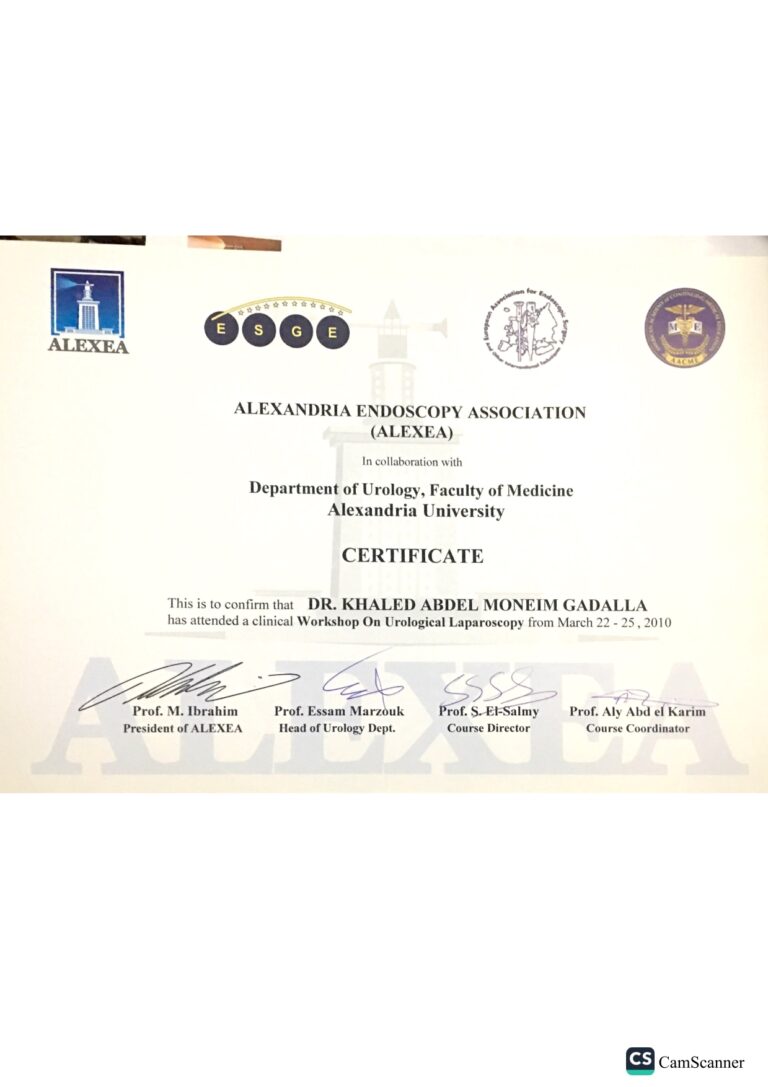
Introduction to Professor Dr. Khaled Abdel-Moneim Jad Allah
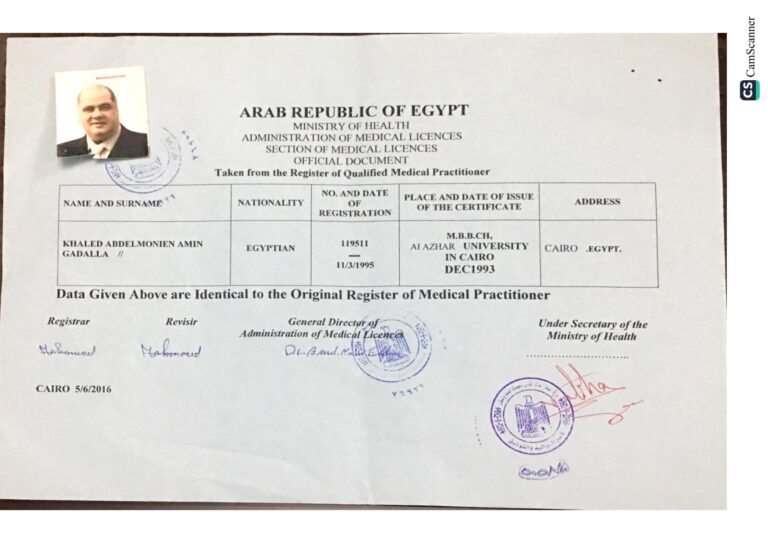
Professor Dr. Khaled Jad Allah obtained his Ph.D. from Al-Azhar University. Since this specialization had no training opportunities in Egypt at that time, he embarked on multiple trips abroad to the finest American and European universities for training in providing specialized and precise medical services.
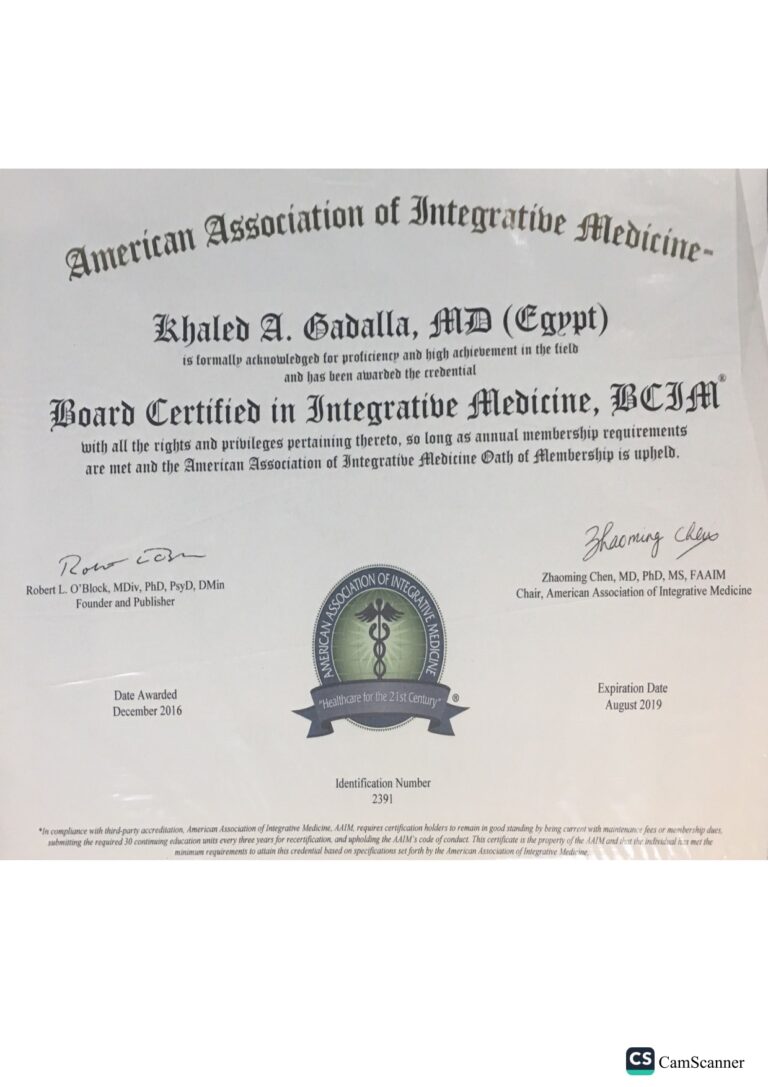
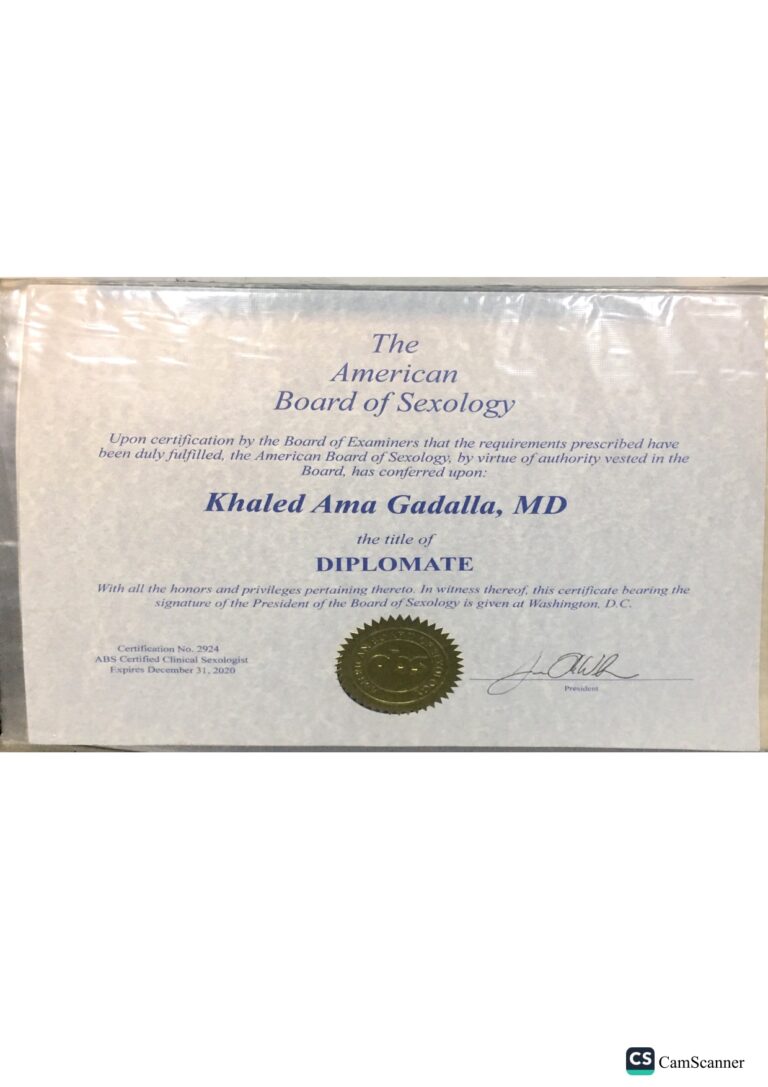
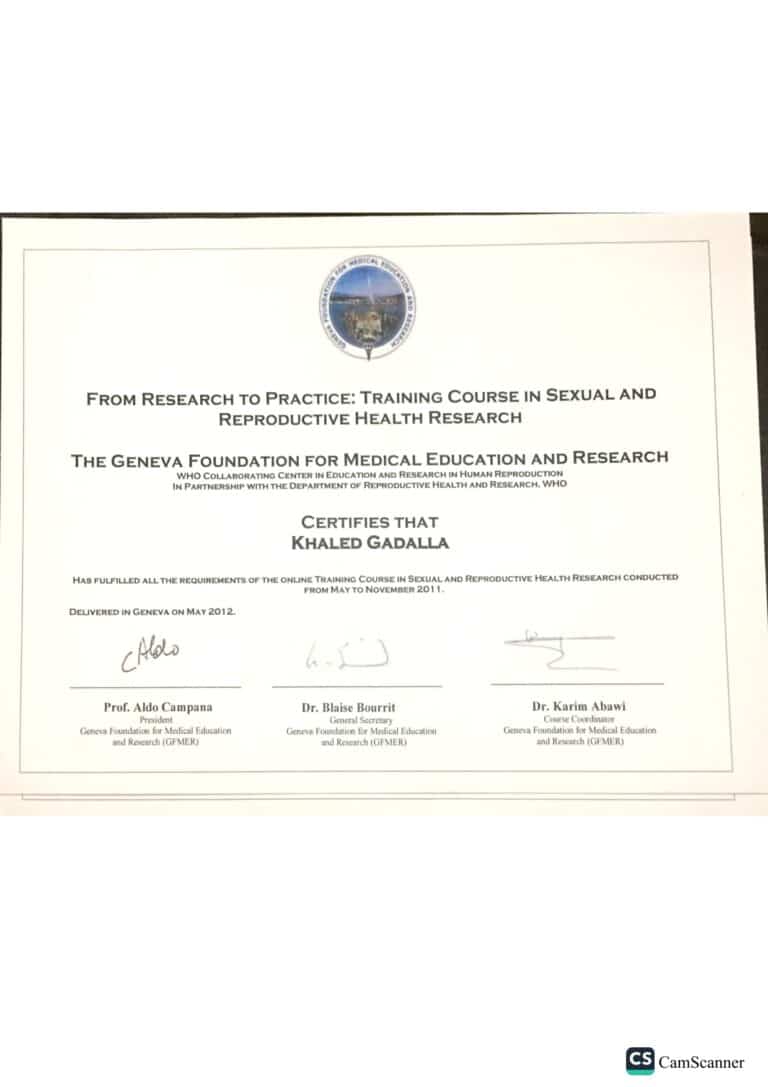
Professor Dr. Khaled Jad Allah obtained the American board certification in Sexual Medicine, making him one of only two individuals in Egypt to achieve this prestigious scientific degree. He earned a Ph.D. in Clinical Sexual Medicine from the American Academy of Clinical Sexologists. When the European Society for Sexual Medicine decided to qualify the first three hundred doctors from Europe and various parts of the world, he was among the first group. They underwent advanced courses in Spain, Portugal, England, and France, culminating in their achievement of the European Fellowship in Sexual Medicine in 2012, making them the first European specialists in Sexual Medicine.
Professor Dr. Khaled Jad Allah has conducted numerous scientific research and writings in international scientific journals and monthly periodicals. His research has been presented at conferences of the European Society for Sexual Medicine.
Professor Dr. Khaled Jad Allah has performed many advanced surgical operations using microscopic surgeries, achieving success rates comparable to global standards. He has also carried out cosmetic surgeries on the male reproductive organ with remarkable success, establishing himself as an expert in this field, considering the success rates of these surgeries.
The television programs hosted by Professor Dr. Khaled Jad Allah are considered among the most successful cultural programs focusing on male sexual health and reproductive health. These programs are broadcasted on channels such as Health and Beauty, Al-Mehwar, Al-Nas, and Al-Nahar.
His program "The People's Doctor," which airs on Thursdays, achieved an advanced ranking among the top five medical programs with the highest viewership in 2012, according to the Eipos organization for media statistics.

My story with medicine began when I entered medical school, dealing with medical sciences, diseases, medications, the human body, aspects of illness, and various treatment methods. I learned the scientific basics of some pathological phenomena and started understanding the nature of the human body, how to perform vital functions, and, upon completing my studies, joined a more challenging program – the practical training program. Here, we got closer to the disease, its causes, treatment methods, and how to diagnose it, developing treatment skills under the supervision of several esteemed professors at the medical school.
After completing the residency period, reaching what we considered a good level in handling diseases, and obtaining a master’s degree in the field, we were appointed as assistant professors at the medical school. This marked the beginning of a new stage in science and education, acquiring advanced skills in dealing with patients, learning more advanced and precise methods, and becoming responsible for training many resident doctors and interns. This stage concluded with becoming a respected faculty member, initiating the path of scientific research based on the skills acquired during that previous period.
With this journey, I developed an internal drive to excel in a specific field. After extensive studies, I discovered a significant deficiency in addressing male diseases, specifically related to men’s sexual health and reproductive health. Around twenty years have passed as I tried to be helpful to patients in this challenging field. I embarked on a long learning journey, traveling to half of Europe and the United States multiple times to obtain scientific qualifications for this specialization and acquire the necessary medical skills to deal with patients.
The complexity of the subject became apparent, encompassing various causes, diseases, preventions, behaviors, and lifestyles, not just medications and surgeries, with different schools of thought for disease management. I began applying theories, skills, and tools to deal with the disease, only to confront challenges that made me pause.
The percentage of cases without a known cause reaches up to 60% in some diseases, meaning that about two-thirds of patients cannot have their condition diagnosed or the cause of their illness identified, leading to challenges in deciding on treatment methods.
Especially in the field of reproductive health, there are cases where both the man and woman seem normal, with no history of pregnancy or childbirth. However, upon closer examination, some men not only lack sperm in the semen but also show no sperm in the testes, despite the testicular tissue appearing normal under the microscope. This led us to two conclusions:
First: Conception does not solely result from good analysis but ultimately depends on the will of God.
ثانيا: لابد من البحث Second: It is crucial to search for the root of the problem, not just its surface.
This is not a departure from science but a return to the long-standing belief in the Creator’s power. The presence of good sperm does not definitively guarantee pregnancy, nor does the absence of viable sperm definitively prevent it. We have witnessed such paradoxes.
Thus, we need to re-examine the disease through new methods and numerous repetitions to find the causes. We started exploring new diagnostic methods and encountered dozens of innovative approaches that were unfamiliar in our Arab region. We began applying them and observed positive responses in a significant percentage of cases, thanks to these new diagnostic and therapeutic methods. Simultaneously, we introduced new methods for diagnosing unusual and unknown causes that hinder reproduction.
However, the problem lies in not knowing why some cases respond while others do not. The difficulty arises when patients ask about the success rate of these methods, and we cannot provide a conclusive answer. This led to the realization that we cannot see our way clearly and identify the correct path causing difficulty in dealing with the disease.
The problem becomes apparent when patients inquire about the success rate of these methods, and we cannot provide a satisfactory answer. The physician also struggles to answer the patient’s questions. After attending numerous conferences and following scientific studies on this topic, we discovered that we had reached the beginning of a new phase, where the result of this stage was the battle against failure and avoiding dismal failure. We found that for all those years, we were on the wrong and failed path. Our focus was on the disease, its causes, diagnosis, and treatment methods, with little attention given to another element: the patient.
From that point, another journey began.
For a long time, the call for the philosophical medical hypothesis based on the need to focus on the patient rather than the disease has been present. Unfortunately, traditional medicine still tends to focus on the disease, suppressing and extinguishing symptoms.
A human being is comprised of a body, mind, heart, and soul. To achieve healing for the patient, the physician must care for all elements of the patient. Modern medicine has affirmed that the comprehensive approach to treating humans is indispensable.
Our ancestors, medical giants, and scholars laid the foundation for medicine centuries ago. They practiced it and wrote about it, as seen in Ibn Sina’s book “The Canon of Medicine,” a primary reference studied in European medical schools for around 500 years.
However, in the past decades, there has been a separation of these elements. Physicians began relying solely on treating the body, focusing on the disease and its symptoms, completely neglecting the patient and failing to address their psychological, emotional, or spiritual needs.
Here, the role of the wise healer, as physicians were formerly called, comes to light once again.
In my journey with the patient, I discovered that a patient goes to the doctor complaining of infertility, takes the suggested treatment, or undergoes surgery without receiving a medical explanation of the nature of the disease or a diagnosis of the problem. Success rates are often inflated in the patient’s mind, leading to unrealistic expectations. When the scientifically expected results do not materialize early in the treatment process, causing a strong emotional shock for the couple, they tend to halt the treatment, even if it is available, and the patient completely distances themselves from the path of recovery.
When I began dealing with the patient in this manner, initially fearful of the medical reality confronting the disease, I was surprised to find that patients felt respect and sincerity from the doctor. When I informed a patient that the success rate of extracting sperm from the testes was not higher than 1%, I was astonished when he responded, “Why not me? Don’t deprive me of this dream.”
As a result of this realization, I learned that the problem lay within us as doctors, not in the patient. The patient is capable of respecting their illness and their doctor if the doctor respects the patient, their mind, and understands their psychological and emotional needs. There is no need for fear.
I started giving patients advice after explaining the problem. To my surprise, when I told a patient to quit smoking, for example, they agreed to undergo surgery rather than just take medication, as long as they stopped smoking. After explaining the nature of the disease and the negative impact of smoking on their reproductive or sexual function, using direct explanations and some specially prepared pamphlets to help them understand the nature of certain diseases and incorrect behaviors, I was amazed to find that around 80% of patients actually quit smoking on the first attempt. This percentage increased to about 90% during subsequent visits to the center after blaming them strongly for neglecting their health and telling them they had to choose between what they desired and continuing to smoke.
Patient care is the lifeline to escape from the previous failure in treating these challenging cases because what we eat today reflects on what the testicle produces after three months. Therefore, we cannot separate between the disease and the patient; both are important, and we must care for both simultaneously.