



Introduction to the Relationship Between Thyroid Gland Disorders and Male Infertility
The thyroid gland is a gland located in the mid-neck area in both men and women. It regulates metabolic processes, energy utilization, and can experience two main types of problems related to its function.
Hypothyroidism (Underactivity)
In cases of hypothyroidism, the thyroid gland is underactive. Men with hypothyroidism often experience symptoms of decreased metabolism, including low energy, weight gain, and potential interference with testosterone levels. Hypothyroidism is usually treated with alternative thyroid hormone, and levels of thyroid-stimulating hormone (TSH) are typically elevated in men with hypothyroidism.
Hyperthyroidism (Overactivity)
In hyperthyroidism, the thyroid gland is overactive. Symptoms may include weight loss, sweating, and rapid heartbeat. Investigation into the cause of elevated thyroid hormone levels may reveal autoimmune thyroiditis (Hashimoto’s) or thyroid tumors. Treatment often involves thyroid gland removal. TSH levels are usually low in men with hyperthyroidism.
Both hypothyroidism and hyperthyroidism can adversely affect natural sperm production. However, thyroid disorders are a rare cause of male infertility. Thyroid function studies are recommended for male fertility patients only when symptoms such as significant weight changes, abnormal energy levels, sweating, or rapid heartbeat are present. Thyroid function treatment can improve sperm parameters and fertility in men with thyroid dysfunction, but mild thyroid abnormalities generally do not lead to fertility issues.
Thyroid Disorder Assessment
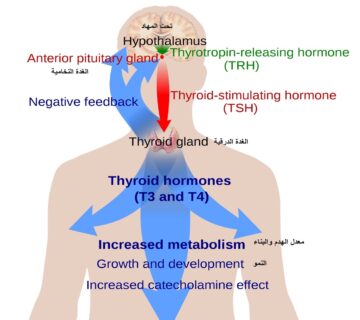
The initial screening test for men showing symptoms of thyroid dysfunction is the thyroid-stimulating hormone (TSH) test. TSH is a hormone from the anterior pituitary gland that stimulates the thyroid gland to produce thyroxine (T4), which is then converted to triiodothyronine (T3). The normal range for TSH is 0.4-3.0 µIU/mL.
Treatment of Thyroid Disorders in Men with Infertility
If TSH levels are abnormal, a comprehensive evaluation by an endocrinologist or male fertility specialist is necessary to rule out tumors or other medical issues. Hormone levels such as T3/T4 should also be studied at this time.
لا تعليق